
The biggest myth in home detox is that “BPA-free” means safe; the reality is that many alternatives are just as harmful, a phenomenon known as “regrettable substitution.”
- True detoxification focuses on understanding and interrupting chemical exposure pathways—like heat with plastics, dust as a chemical carrier, and absorption from bedding—rather than just avoiding a list of ingredients.
- Prioritizing high-impact changes, such as switching to glass for food storage and using a HEPA filter, provides a greater health return than trying to eliminate every minor toxin.
Recommendation: Start by eliminating the heating of all plastic food containers, even “microwave-safe” ones, as this is the single most significant source of endocrine disruptor ingestion for many families.
For any parent, navigating the world of home safety can feel like walking through a minefield. You hear about the dangers of plastics, the chemicals in cleaning supplies, and the toxins in everyday items. The common advice is to “go organic,” “avoid chemicals,” and “read labels,” but this often leads to more confusion and anxiety than clarity. What does “BPA-free” really mean? Are all “natural” products truly safe? The sheer volume of information is overwhelming, leaving you wondering where to even begin.
The problem with most home detox guides is that they provide an endless checklist of “bad” things to avoid without explaining the underlying science. But what if the key wasn’t about eliminating every single potential toxin, but about understanding the primary ways they enter our bodies? The secret to a less stressful and more effective home detox lies in focusing on the main exposure pathways—ingestion, inhalation, and skin absorption—and interrupting the most significant ones first. This involves recognizing the deceptive trap of “regrettable substitutions,” where a known harmful chemical like BPA is simply replaced by a similar, often untested, chemical like BPS.
This guide will move beyond generic advice. As an environmental health scientist, I will walk you through a prioritized, evidence-based approach. We will deconstruct the most common exposure routes in your home, from the kitchen to the bedroom, and provide practical, high-impact solutions. You’ll learn not just what to change, but *why* it matters, empowering you to create a genuinely healthier sanctuary for your family without the overwhelm.
To help you navigate these critical steps, this article breaks down the most impactful changes you can make. The following summary outlines the key areas we will cover, from daily habits in the kitchen to long-term strategies for improving your home’s environment.
Summary: A Strategic Guide to Reducing Home Toxins
- Why Heating Plastic Tupperware Is the Number One Habit to Break?
- How to Clean Your Bathtub with Vinegar and Baking Soda Effectively?
- Cotton vs Polyester: Which Sheets Improve Sleep Quality and Reduce Sweating?
- The “Clean Smell” Myth That Pollutes Your Indoor Air Quality
- How to Choose a Water Filter That Actually Removes Lead and PFAS?
- The Skincare Ingredients You Must Avoid Immediately After Conception
- Why Hiring a Cleaner Might Be Cheaper Than Your Hourly Rate?
- Strengthening Your Child’s Immune System Before Daycare Starts
Why Heating Plastic Tupperware Is the Number One Habit to Break?
The single most significant source of exposure to endocrine-disrupting bisphenols for many families is the seemingly innocent act of microwaving food in plastic containers. When heated, plastics—even those labeled “microwave-safe” or “BPA-free”—can leach chemicals directly into your food. The term “BPA-free” has become a marketing tool, but it often conceals a troubling practice known as “regrettable substitution.” Manufacturers simply replace Bisphenol-A (BPA) with structurally similar chemicals like Bisphenol-S (BPS) or Bisphenol-F (BPF), which are not as well-studied but are increasingly linked to the same health concerns, including metabolic and hormonal disruption.
This isn’t just a theory. A recent analysis reveals that 76% of bisphenol-related metabolic disease worldwide is now attributed to these BPS and BPF substitutes, proving that the “BPA-free” label offers a false sense of security. The primary exposure pathway here is ingestion, and by heating the plastic, we dramatically accelerate the transfer of these chemicals into our family’s meals. Stopping this one habit is a high-impact, immediate way to reduce your family’s chemical load.
Case Study: The European BPA Ban and the Rise of Substitutes
A study of European regulations illustrates the “regrettable substitution” phenomenon perfectly. Following bans on BPA in certain products, researchers found that public exposure to BPA did indeed decrease by 33%. However, over the same period, exposure levels to its substitutes skyrocketed: BPS levels increased by 47% and BPF by 22%. This demonstrates that without a broader understanding of chemical families, well-intentioned regulations can simply shift the problem from one harmful chemical to another, highlighting the need for consumers to be wary of single-chemical marketing claims like “BPA-free.”
To effectively eliminate this risk, the focus should be on replacing plastic for any food-related task involving heat. Start by switching to glass or stainless steel containers for storing and reheating leftovers. Let hot food cool down completely before it goes into any plastic container you might still use for cold storage. Finally, immediately discard any plastic containers that are scratched, cloudy, or damaged, as they are known to leach chemicals at a much higher rate. By focusing on the material that touches your hot food, you address the most critical point of exposure.
How to Clean Your Bathtub with Vinegar and Baking Soda Effectively?
Many conventional bathroom cleaners achieve their “squeaky clean” finish through harsh surfactants and disinfectants that can disrupt your home’s beneficial microbiome and release volatile organic compounds (VOCs) into the air. Creating a healthier home environment means finding effective, non-toxic alternatives. A combination of baking soda and white vinegar is a powerful, safe, and inexpensive solution for tackling soap scum, hard water stains, and grime in the bathtub without exposing your family to endocrine disruptors.
The effectiveness of this method lies in a simple acid-base reaction. Baking soda (sodium bicarbonate) is a mild alkali that helps break down greasy soap scum and body oils. When you add white vinegar (a mild acid), it reacts with the baking soda to create a fizzing action. This carbon dioxide bubbling helps to physically lift dirt and grime from the surface, making it easier to scrub away without the need for aggressive chemicals. This process cleans effectively while preserving the air quality and the delicate balance of microorganisms in your home.
For a truly deep clean, you can enhance this basic formula. Here is a step-by-step method to get professional-grade results:
- Step 1: Sprinkle a generous layer of baking soda over the entire damp surface of the tub, focusing on areas with visible stains or soap scum buildup. Let it sit for about 10 minutes.
- Step 2: Fill a spray bottle with white vinegar and spray it over the baking soda. You’ll notice an immediate fizzing reaction.
- Step 3: For tougher grime, add a few drops of natural castile soap to your scrubbing sponge. This will help cut through stubborn body oils that the baking soda and vinegar might not fully dissolve.
- Step 4: Scrub the entire tub with a non-scratch sponge or brush. For yellowed areas, you can treat them separately with hydrogen peroxide (never mix it directly with vinegar).
- Step 5: Rinse the tub thoroughly with hot water to wash away all residue.
This method not only leaves your bathtub sparkling but does so without introducing harmful chemicals into your family’s environment, a crucial step in a holistic home detox strategy.
Cotton vs Polyester: Which Sheets Improve Sleep Quality and Reduce Sweating?
We spend roughly a third of our lives in bed, making our bedding a significant, yet often overlooked, source of prolonged chemical exposure. The choice between natural fibers like cotton and synthetic ones like polyester has implications not just for comfort, but for your body’s ability to regulate temperature and avoid endocrine-disrupting chemicals. The primary exposure pathways at play here are dermal absorption and inhalation, as we are in direct contact with these materials and breathe in any fibers or chemicals they shed.
Polyester, a plastic-based fabric, is inherently non-breathable. It traps heat and moisture, which can lead to night sweats and disrupt restorative sleep. More concerningly, it acts as a carrier for EDCs. Polyester fabrics are often treated with flame retardants and synthetic dyes, and they shed microplastic fibers with every wash. These microplastics can bind with other chemicals present in household dust, such as phthalates, creating a concentrated source of toxins that you lie in all night.
In contrast, 100% cotton is a natural, breathable fiber. It wicks moisture away from the body, helping to regulate temperature and promote deeper sleep. While conventional cotton can be grown with pesticides and finished with chemicals like formaldehyde, choosing certified organic options minimizes these risks. Look for certifications like GOTS (Global Organic Textile Standard), which ensures the material is grown organically and processed without harmful chemicals, or OEKO-TEX, which tests the final product for a list of harmful substances.
Switching to organic cotton bedding is a high-impact change that reduces your nightly chemical load, improves sleep hygiene, and eliminates a major source of microplastic pollution in your home. The following table breaks down the key differences.
| Factor | 100% Cotton | Polyester |
|---|---|---|
| Microplastic Shedding | None | Releases microplastics with every wash |
| Chemical Treatments | May have formaldehyde finishes (look for GOTS certified) | Contains flame retardants and synthetic dyes |
| Breathability | Excellent – natural moisture wicking | Poor – traps heat and moisture |
| EDC Exposure Risk | Low with organic options | High – acts as carrier for phthalates and flame retardants in dust |
| Certifications to Seek | GOTS (organic), OEKO-TEX | OEKO-TEX (tests for harmful substances) |
The “Clean Smell” Myth That Pollutes Your Indoor Air Quality
We are culturally conditioned to associate scents like “lemon fresh” or “spring rain” with cleanliness. However, this “clean smell” is often a myth that masks a significant source of indoor air pollution. The vast majority of scented products—from air fresheners and scented candles to laundry detergents and even trash bags—use a cocktail of synthetic chemicals to create their fragrance. The primary exposure pathway here is inhalation, directly introducing these chemicals into your lungs and bloodstream.
The problem lies with the term “fragrance” or “parfum” on an ingredient label. As the Environmental Working Group (EWG) notes, “Fragrance is an umbrella term that companies use to protect recipes as ‘trade secrets,’ potentially encompassing hundreds of synthetic chemicals.” This legal loophole allows companies to hide dozens or even hundreds of ingredients, many of which are known endocrine disruptors. A landmark EWG study found that 72% of products listing “fragrance” contained phthalates, a class of chemicals linked to hormonal disruption and developmental issues.
When you use these products, you are not “freshening” the air; you are releasing a plume of VOCs and semi-volatile organic compounds (SVOCs) that can linger in the air and settle into household dust. To truly improve your indoor air quality, the goal should be to eliminate odors, not mask them. This means addressing the source of bad smells (e.g., taking out the trash, cleaning spills) and promoting ventilation by opening windows. For a pleasant scent, switch to natural alternatives like a diffuser with pure essential oils, or simply boil a pot of water with a cinnamon stick and orange peels. Removing hidden fragrance sources is a critical step in reducing your family’s daily chemical inhalation.
- Replace scented trash bags and diapers with fragrance-free versions.
- Eliminate plug-in air fresheners, sprays, and scented candles. Opt for unscented beeswax candles instead.
- Switch to unscented laundry detergent and dryer balls instead of fabric softeners and scented sheets.
- Check personal care products and even office supplies like stationery for hidden fragrances.
How to Choose a Water Filter That Actually Removes Lead and PFAS?
Ensuring your family has clean, safe drinking water is a cornerstone of a healthy home. However, not all water filters are created equal. A standard carbon pitcher filter may be sufficient for improving the taste and odor of chlorinated municipal water, but it is largely ineffective against more sinister contaminants like lead, heavy metals, and “forever chemicals” like PFAS (per- and polyfluoroalkyl substances). Choosing the right filter requires understanding what specific contaminants you need to remove, as the primary exposure pathway is direct ingestion.
PFAS contamination is a growing concern. These industrial chemicals are extremely persistent in the environment and are linked to a host of health problems. According to Environmental Working Group mapping, PFAS chemicals could contaminate the drinking water for up to 200 million Americans. Lead, often from aging pipes, is another serious neurotoxin, particularly for children. To effectively remove these specific threats, you need a more robust filtration system.
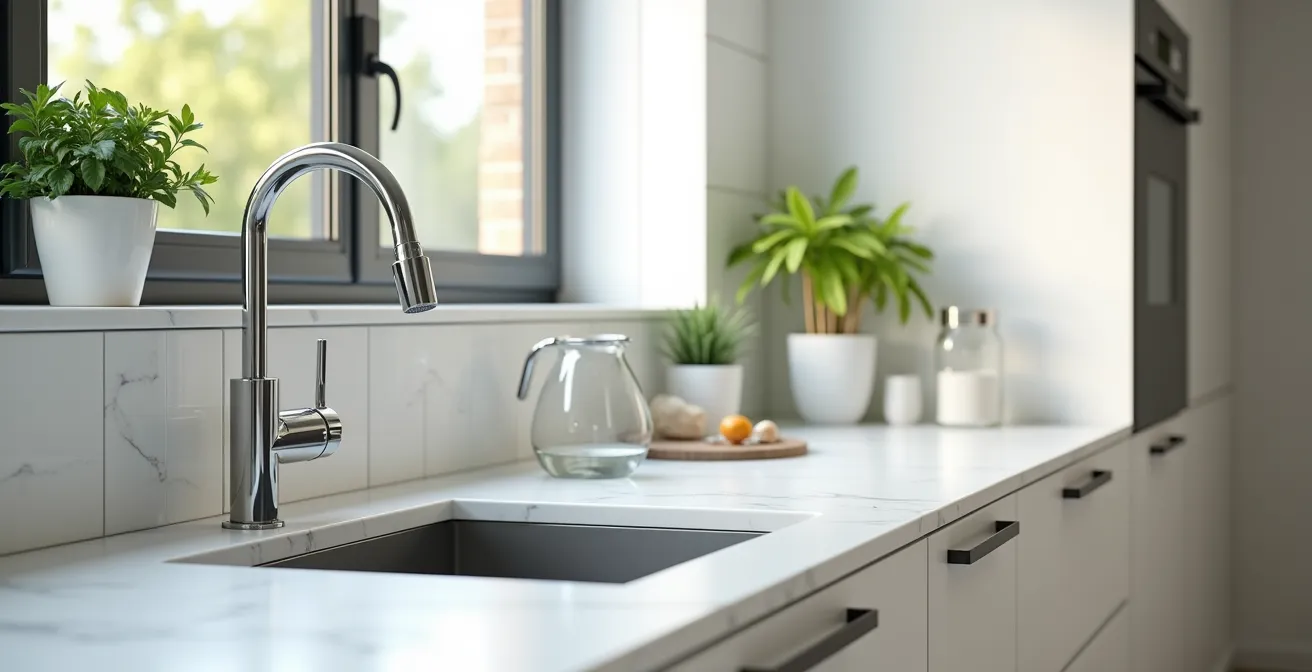
The two most effective technologies for removing a broad spectrum of contaminants, including lead and PFAS, are reverse osmosis (RO) and solid carbon block filters certified by NSF International. An under-sink RO system is often considered the gold standard for point-of-use filtration, as it can remove over 95% of total dissolved solids. When selecting a filter, it is crucial to look for NSF certifications (like NSF/ANSI 53 for lead and NSF/ANSI 58 for RO systems) that specifically name the contaminants you are targeting. Remember that even the best filter is only effective if its cartridges are replaced on schedule.
- For PFAS and lead, a reverse osmosis system or an NSF-certified carbon block filter is necessary.
- For basic chlorine taste and odor, a standard carbon pitcher filter is adequate.
- If you have a private well, get it tested by a state-certified lab specifically for local contaminants like PFAS or nitrates.
- Always replace filter cartridges according to the manufacturer’s guidelines to ensure continued effectiveness.
The Skincare Ingredients You Must Avoid Immediately After Conception
The period from conception through the first two years of a child’s life—often called the “first 1,000 days”—is a critical window for development. During this time, the fetus and infant are uniquely vulnerable to the effects of endocrine-disrupting chemicals. As research shows that exposure to EDCs during the first 1000 days can have more significant and lasting effects on development, what a mother puts on her skin becomes profoundly important. The skin is the body’s largest organ, and the dermal absorption pathway allows chemicals from lotions, sunscreens, and serums to enter the bloodstream.
During pregnancy, it’s crucial to scrutinize skincare labels and make targeted swaps. Certain ingredients, while common in anti-aging or acne products, should be avoided entirely. Retinoids (like Retinol and Retin-A) are a primary concern, as high doses have been linked to birth defects. Chemical sunscreens, particularly oxybenzone, are another class to avoid due to their known endocrine-disrupting properties. Instead, opt for mineral-based sunscreens containing zinc oxide or titanium dioxide, which create a physical barrier on the skin rather than being absorbed.
Other common culprits include parabens, which are preservatives that can mimic estrogen, and phthalates, often hidden under the “fragrance” label. Even some “natural” ingredients, like high concentrations of lavender and tea tree essential oils, have been shown to have estrogenic properties and are best used with caution during pregnancy. The goal is to simplify your routine, focusing on gentle, hydrating products with minimal, recognizable ingredients. The table below offers a clear guide for safe swaps.
| Avoid | Reason | Safe Alternative |
|---|---|---|
| Retinoids (Retinol, Retin-A) | Linked to birth defects | Bakuchiol (plant-based retinol alternative) |
| Chemical Sunscreens (Oxybenzone) | Endocrine disruption | Mineral sunscreens (Zinc oxide, Titanium dioxide) |
| Parabens | Hormone mimicking | Phenoxyethanol or preservative-free products |
| Phthalates in Fragrance | Developmental issues | Essential oil blends or fragrance-free |
| Lavender/Tea Tree Oil | Estrogenic properties | Chamomile or calendula extracts |
Key takeaways
- Household dust is a primary carrier for endocrine-disrupting chemicals (EDCs), making effective dust removal a top priority for reducing exposure.
- A HEPA filter vacuum is a critical tool, as it traps fine particles containing EDCs rather than recirculating them into the air.
- Outsourcing cleaning can be a strategic health investment if you control the products and methods used, freeing up your time while ensuring a non-toxic clean.
Why Hiring a Cleaner Might Be Cheaper Than Your Hourly Rate?
For busy parents, time is the most valuable commodity. The hours spent on deep cleaning could be spent with family, resting, or on income-generating work. Many dismiss hiring a cleaning service as a luxury, but when viewed through the lens of health and opportunity cost, it can be a strategic investment. This is especially true when considering the most pervasive and often ignored exposure pathway for EDCs in the home: household dust. As the Environmental Working Group states, dust is not inert; it is a primary reservoir for toxins shed by consumer products.
Household dust is a toxic stew containing chemicals shed by home products, paint, mold, bacteria, and can be a primary carrier for EDCs.
– Environmental Working Group, 7 Ways to Detox Your Home Year Round
Simply wiping surfaces is not enough. Effective removal of this toxic dust requires specific tools and consistent effort. A vacuum with a HEPA (High-Efficiency Particulate Air) filter is essential, as it captures the microscopic particles that carry EDCs, rather than just blowing them back into the air like standard vacuums. Regular, thorough dusting and vacuuming is one of the most effective ways to lower your family’s daily chemical burden. When you calculate your own hourly rate against the cost of a cleaning service, and factor in the long-term health benefits of proper toxin removal, outsourcing can make financial and logical sense.
However, the key to a successful “detox” cleaning strategy is to maintain control. You don’t just hire a service; you direct them. By providing your own non-toxic cleaning supplies and a clear set of instructions, you leverage their time and labor while ensuring your home is cleaned according to your health standards. This transforms the service from a simple convenience into a powerful tool in your home health arsenal.
Your Action Plan: Detox Your Cleaning Strategy
- Calculate the True Cost: Compare your hourly rate (or the value of your free time) to the cost of a cleaning service. Factor in the health benefit of consistent, deep dust removal.
- Provide a Non-Toxic Kit: Equip your cleaner with your own approved supplies: a HEPA vacuum, microfiber cloths, and a simple kit of vinegar, baking soda, and castile soap.
- Create a “Yes/No” List: Give your cleaner a clear, simple list of products they are allowed to use and which commercial products (like bleach or scented sprays) are forbidden in your home.
- Direct the Focus: Instruct them to prioritize thorough dusting of all surfaces and vacuuming with the HEPA filter, especially in bedrooms and children’s play areas where exposure is highest.
- Schedule Deep Cleans: Use the service not just for maintenance, but for regular deep cleaning tasks (like vacuuming upholstery and behind furniture) to prevent the long-term buildup of EDC-laden dust.
Strengthening Your Child’s Immune System Before Daycare Starts
A child’s immune system is a complex, developing system that learns from its environment. While exposure to some germs is necessary to build resilience, constant exposure to chemical stressors can weaken its ability to respond effectively to pathogens. Creating a low-toxin home environment is not about creating a sterile bubble; it’s about reducing the unnecessary chemical burden on your child’s body, freeing up their immune system to focus on real threats like the viruses and bacteria they will encounter at daycare.
The concept of an “environmental shield” involves making targeted changes to the home to minimize chemical exposures that can trigger inflammation or disrupt hormonal balance. This is especially critical in light of research that shows the extent of our pre-existing chemical load. A startling Environmental Working Group study revealed 287 different industrial chemicals in the umbilical cord blood of newborns, with many known to be toxic to the brain and nervous system. Reducing ongoing exposure at home can help the body process and eliminate these substances, supporting robust immune function.
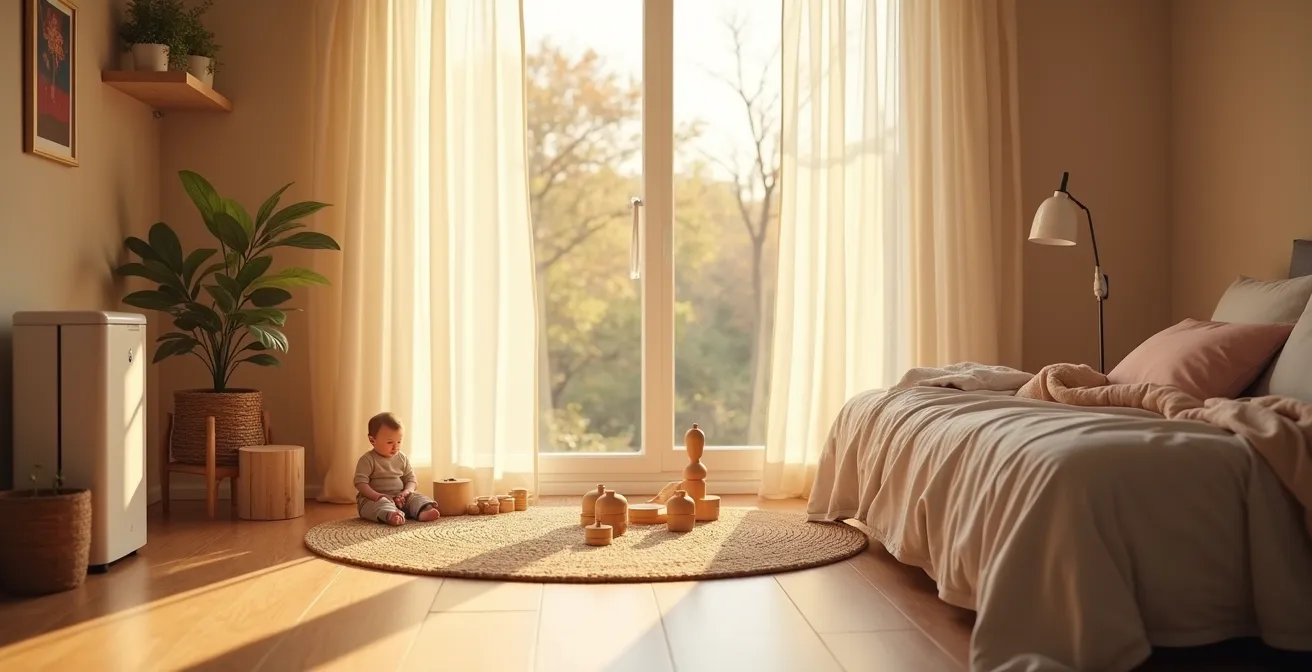
Key actions focus on the two main exposure pathways at home: inhalation and ingestion. Start with the air your child breathes, especially where they sleep. A HEPA air purifier in the bedroom can significantly reduce airborne pollutants, allergens, and pathogens. Next, focus on what touches their food and skin. As discussed, using glass or stainless steel for food and drinks and choosing organic cotton bedding reduces exposure to phthalates, bisphenols, and pesticide residues. Finally, consistent removal of household dust with a HEPA vacuum is paramount, as dust acts as a sink for all the chemicals shed by products in your home. These actions work together to lower the overall toxic load, giving your child’s immune system the best possible foundation before they face the challenges of a group care environment.
By implementing these environmental shields, you are not just “detoxing” your home; you are actively engaging in a strategy of preventative health and immune support for your child.
Now that you are equipped with this knowledge, the next logical step is to apply these principles consistently. By focusing on high-impact changes and understanding the science behind them, you can create a truly healthier environment for your family without the overwhelming stress of trying to be perfect. Begin today by tackling the most significant exposure pathway in your kitchen.