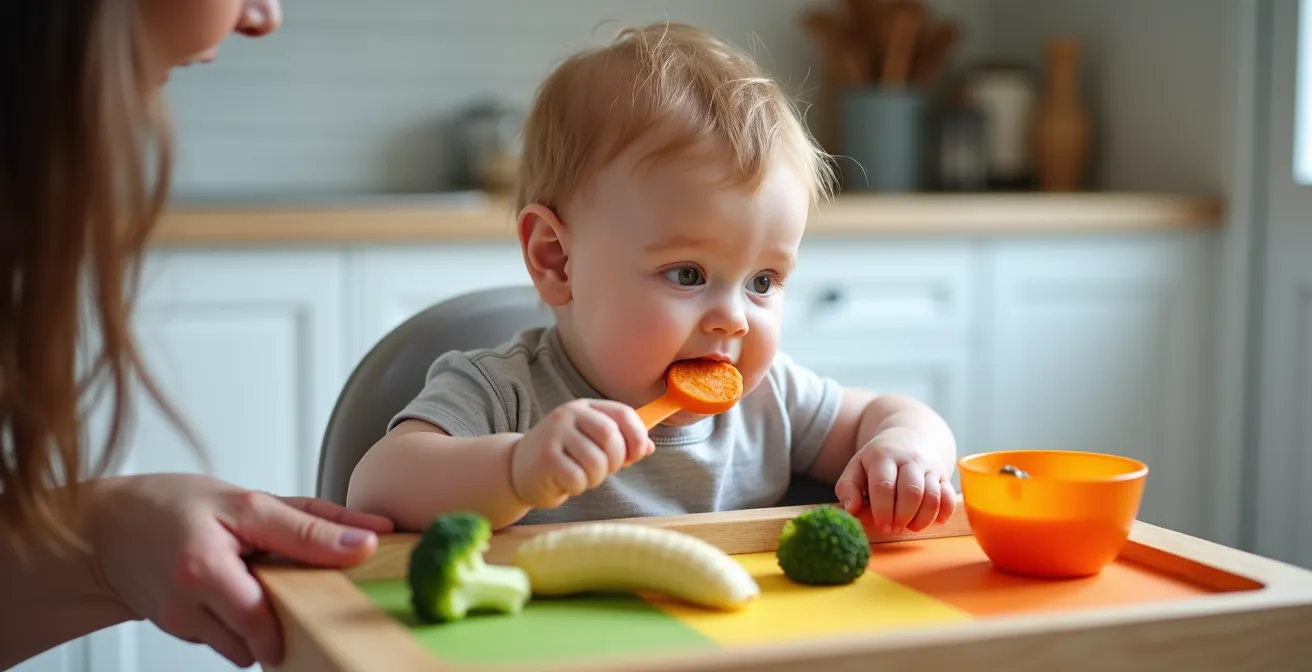
The debate between baby-led weaning and purees misses the point; success isn’t about the method, but about meeting non-negotiable developmental milestones.
- Your baby’s iron stores deplete around 6 months, making iron-rich foods a top priority, regardless of how they are served.
- Early and consistent introduction of allergens (like peanuts) is now proven to drastically reduce allergy risk.
- Progressing food textures between 7-10 months is a critical window for developing lifelong chewing skills.
Recommendation: Shift your focus from “which method is best?” to “how can I use my chosen method to meet my baby’s specific nutritional and developmental needs at each stage?”
As a pediatric dietitian, I see countless parents caught in the confusing crossfire of feeding philosophies: baby-led weaning (BLW) versus traditional purees. The internet is filled with passionate advocates on both sides, leaving many feeling like they have to pick a team. This pressure creates unnecessary stress around what should be an exciting milestone. Parents are often told that BLW promotes independence, while purees offer more control over intake. Some even suggest a “combo” approach, which can feel like a non-committal compromise rather than a confident strategy.
But what if the entire debate is framed incorrectly? The real key to successfully and safely introducing solids isn’t about rigidly adhering to one method. It’s about understanding the fundamental, evidence-based principles of infant nutrition and development. Your baby has specific, time-sensitive needs, such as iron intake, allergen exposure, and learning to manage different textures. These are the nutritional and developmental imperatives that matter most.
This guide will move beyond the surface-level “BLW vs. purees” argument. Instead, we’ll focus on the critical milestones that ensure your baby gets optimal nutrition, develops healthy eating skills, and builds a positive relationship with food. We’ll explore the ‘why’ behind the recommendations, empowering you to make informed, food-positive choices for your family, whether you’re holding a spoon or offering a piece of soft-cooked broccoli.
This article will guide you through the essential knowledge every parent needs. By understanding these core principles, you’ll be able to navigate the introduction of solids with confidence and joy, no matter which feeding style you lean towards.
Summary: A Dietitian’s Framework for Introducing Solids
- Why Breastfed Babies Need Iron-Rich Foods Immediately at 6 Months?
- How to Cut Grapes and Sausages to Eliminate Choking Risks?
- Organic vs Conventional: Which Fruits Are Critical to Buy Organic?
- The Old Advice Mistake That Increased Peanut Allergies by 50%
- When to Move from Purees to Lumps: The Critical Window for Chewing Skills?
- Why Healthy Fats Are Crucial for Speeding Up Brain Signals in Toddlers?
- Catering vs One Meal: Which Approach Reduces Table Stress?
- Why Eating Together Reduces Risk of Teen Substance Abuse Statistically?
Why Breastfed Babies Need Iron-Rich Foods Immediately at 6 Months?
One of the most critical nutritional facts for new parents is that a baby’s needs change dramatically around the six-month mark. While breast milk is a perfect source of nutrition for the first half-year, the iron stores a baby is born with begin to deplete significantly by this age. This isn’t a flaw in breast milk; it’s a natural developmental progression. The introduction of solid foods at six months is therefore not just about exploring flavors, but a biological necessity to replenish this crucial mineral.
Iron is fundamental for rapid brain development, red blood cell production, and overall growth. A deficiency can have lasting impacts on cognitive function and physical development. Unfortunately, this is not a rare issue. Multi-country research shows that 6-37% of exclusively breastfed infants develop iron deficiency by 6 months. This is because their inherited reserves have been used up, and breast milk contains very low levels of iron. The risk becomes so significant that recent nutritional studies indicate that 81.5% of breastfed infants aged 6-12 months consume less than the recommended daily amount of iron.
This is why your first goal when introducing solids should be offering iron-rich foods. This can be done through purees (like iron-fortified infant cereal or pureed lentils and meats) or baby-led weaning (soft-cooked strips of beef, mashed beans on a pre-loaded spoon, or scrambled eggs). The method of delivery is secondary to the nutritional content. Focusing on iron-rich foods from day one sets a strong foundation for your baby’s health.
How to Cut Grapes and Sausages to Eliminate Choking Risks?
The single greatest fear for parents starting solids is choking. This anxiety is valid, but it can be managed with knowledge and preparation. The first step is to understand the crucial difference between gagging and choking. Gagging is a normal, protective reflex where a baby pushes food forward with their tongue. It’s often loud, with coughing and a red face, but the baby is actively breathing and managing the food. Choking is a silent, life-threatening emergency where the airway is blocked.
To prevent choking, the shape and size of the food you offer are paramount. The biggest culprits are firm, round foods that can perfectly block a baby’s small airway. This includes whole grapes, cherry tomatoes, and round slices of hot dogs or sausages. The key is to eliminate this dangerous round shape. All foods should be cut into safe shapes and sizes, a principle that applies to both BLW and finger foods offered alongside purees.
This paragraph introduces the critical techniques for food preparation. To visualize this correctly, the illustration below demonstrates the proper method.
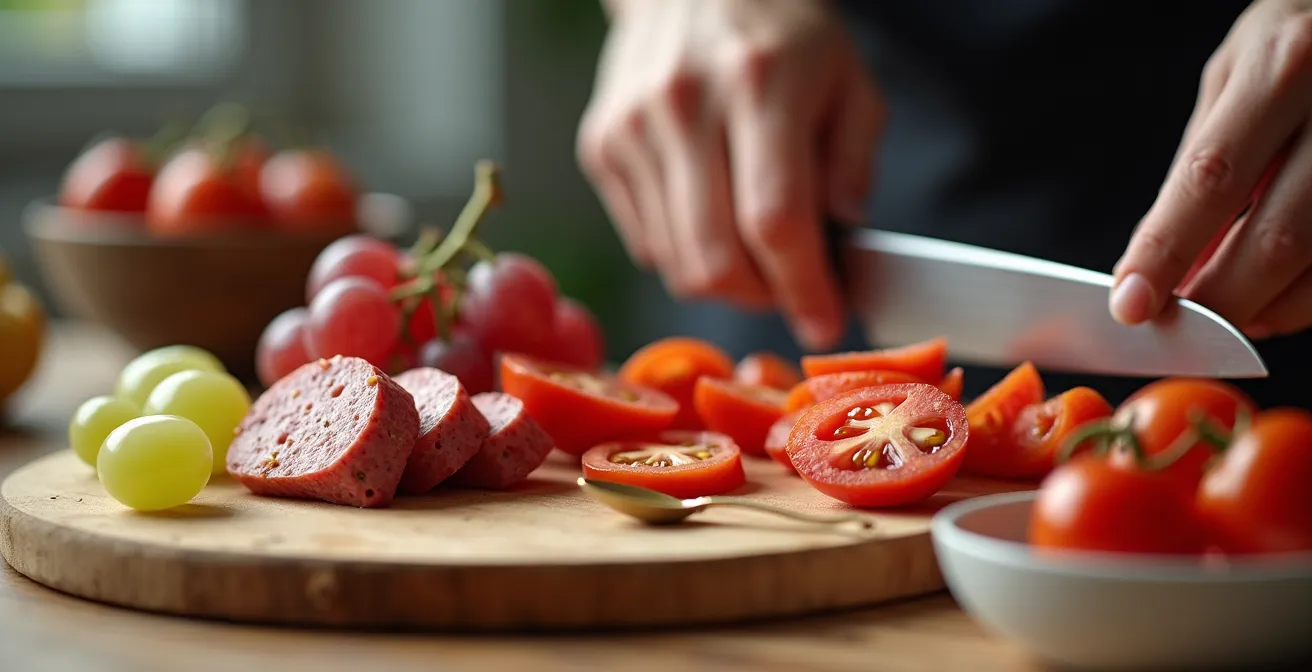
As you can see, grapes and cherry tomatoes must be quartered lengthwise. Sausages should be cut into long, thin strips rather than coin-like pieces. For younger babies (6-8 months) who use their whole palm to grab (palmar grasp), foods should be stick-shaped, about the size of an adult pinky finger. For older babies (9+ months) who have developed the pincer grasp, you can offer smaller, pea-sized pieces of soft-cooked foods.
Understanding the signs of gagging versus choking is just as important as safe food preparation. The following guide provides a clear comparison to help you respond appropriately and calmly during mealtimes.
| Sign | Gagging (Normal) | Choking (Emergency) |
|---|---|---|
| Sound | Loud coughing, retching | Silent or high-pitched wheeze |
| Face Color | Red, flushed | Blue, purple, or pale |
| Breathing | Can breathe between gags | Cannot breathe |
| Baby’s Response | Active, working to clear food | Panicked, unable to cry |
| Parent Action | Stay calm, let baby work through it | Immediate intervention needed |
Organic vs Conventional: Which Fruits Are Critical to Buy Organic?
The “organic or not” question often adds another layer of stress to grocery shopping for a new baby. While an all-organic diet is a valid choice, it’s not always financially feasible or necessary. A more strategic, evidence-based approach is to prioritize which foods to buy organic, especially when it comes to fruits and vegetables. The goal is to reduce pesticide exposure in the items your baby will consume most, particularly those eaten with the skin on.
Pesticide residues tend to concentrate on the skin of produce. Therefore, fruits and vegetables with thin, edible skins are the highest priority for buying organic. These are items where the protective barrier is minimal and consumed directly by your baby. Think of strawberries, peaches, spinach, and bell peppers. Conversely, foods with thick, inedible peels that you remove before serving—like bananas, avocados, pineapples, and mangoes—are generally considered safer to buy conventional, as the peel provides a natural barrier.
This doesn’t mean conventional produce is “bad.” The benefits of a diet rich in fruits and vegetables, regardless of how they are grown, far outweigh the risks of pesticide exposure. The most important step is to wash all produce thoroughly under running water before preparation. This simple action can significantly reduce surface residues on both organic and conventional items. A strategic approach helps you allocate your food budget effectively while minimizing potential risks.
Your Action Plan: Strategic Organic Buying for Baby
- Prioritize organic for soft-skinned fruits that babies eat whole (e.g., strawberries, peaches, nectarines).
- Buy frozen organic berries and vegetables for cost savings and a longer shelf life, ensuring you always have a healthy option on hand.
- Focus your budget on organic versions of the first foods your baby eats most frequently to maximize the impact of your spending.
- Consider conventional options for thick-peeled items where you remove the skin, such as bananas, avocados, and citrus fruits.
- Wash all produce thoroughly with water before peeling or cutting, regardless of whether it is organic or conventional.
The Old Advice Mistake That Increased Peanut Allergies by 50%
For decades, pediatric advice was to delay the introduction of common allergens, especially peanuts, until after a child’s first birthday. The thinking was that avoidance would prevent the development of allergies. However, this well-intentioned guidance backfired dramatically, contributing to a sharp rise in food allergies. We now know that the opposite is true: early and consistent exposure is key to prevention.
This paradigm shift was driven by the landmark 2015 Learning Early About Peanut Allergy (LEAP) study. This research was a game-changer, demonstrating an 81% reduction in peanut allergy risk for high-risk infants who were introduced to peanuts between 4 and 11 months of age compared to those who avoided them. As a result, major health organizations worldwide reversed their guidelines. The new recommendation is to introduce peanuts and other top allergens (like egg, milk, wheat, soy, and fish) shortly after starting solids, around 6 months, provided your baby shows no signs of an existing severe allergy or eczema.
Safely introducing allergens is straightforward. The key is to offer the allergen in an age-appropriate form to prevent choking.

Whole nuts are a choking hazard, but you can thin smooth peanut butter with breast milk, formula, or water to a puree-like consistency and offer a small amount on a spoon or spread thinly on a piece of toast. Similarly, well-cooked, scrambled egg is a perfect first food for introducing egg. The goal is to start with a small amount and, if well-tolerated, continue offering it consistently (e.g., twice a week) to help the immune system build tolerance.
When to Move from Purees to Lumps: The Critical Window for Chewing Skills?
Whether you start with purees or go straight to finger foods, every baby must eventually learn to manage more complex textures. This transition is not just about food; it’s a crucial part of oral motor development. There appears to be a “critical window” for this learning. Delaying the introduction of lumpy or textured foods for too long can lead to feeding difficulties and picky eating later on.
Developmental research indicates that the period between 7 and 10 months of age is the critical window for texture progression. During this time, babies are neurologically primed to learn how to move food around in their mouths, mash it with their gums, and develop the lateral tongue movements necessary for chewing. If they are only exposed to smooth purees during this phase, they may miss the optimal time to build these skills. According to the CDC, introducing textures in this timeframe is vital for accepting a wider variety of foods as they grow. The transition should be gradual, moving from smooth to lumpy, and finally to soft finger foods.
A great way to manage this is with the “Texture Bridge” method, which slowly increases the complexity of foods. This helps your baby build confidence and skill without being overwhelmed. The steps can look something like this:
- Smooth Purees: Start with silky-smooth purees for the first week or two to master the basic swallow reflex.
- Fine Textures: Instead of blending a banana, mash it well with a fork. This introduces a subtle, grainy texture.
- Soft Lumps: Add very small, soft-cooked pasta stars or well-cooked quinoa to a vegetable puree.
- Dissolvable Textures: Offer baby puffs or other dissolvable solids that melt quickly in the mouth, teaching them to manage a solid form with low risk.
- Soft Finger Foods: By 8-9 months, offer soft-cooked, stick-shaped foods like steamed carrot sticks, roasted sweet potato wedges, or avocado slices.
Why Healthy Fats Are Crucial for Speeding Up Brain Signals in Toddlers?
While iron is the headline nutrient for starting solids, healthy fats are the unsung heroes of early childhood nutrition. A baby’s brain more than doubles in size during the first year of life, and this rapid growth is fueled by fat. Specifically, fats like DHA (an omega-3 fatty acid) are primary structural components of the brain and retina. They are also essential for myelination—the process of coating nerve fibers in a fatty sheath (myelin) that allows brain signals to travel faster and more efficiently.
Think of myelin as the insulation on an electrical wire. Without it, signals are slow and weak. A diet rich in healthy fats helps build this insulation, supporting everything from cognitive processing and memory to motor skill coordination. This is why sources of healthy fats should be a regular feature in your baby’s diet from the moment they start solids. While we have established that iron is essential for rapid brain development, fat is the building block that makes that development structurally sound.
Integrating these foods is simple and delicious. Avocado can be mashed or cut into spears, nut butters (thinned for safety) can be stirred into oatmeal, and small pieces of flaky, fatty fish like salmon are wonderful first foods. Cooking with healthy oils like olive or avocado oil also contributes to their intake. Prioritizing these brain-building foods supports your child’s neurological development for years to come.
Introducing solids is a messy endeavor! But remember, the goal with first foods for baby is that they’re introduced to flavors, nutrients, and foods they can easily eat or suck on. It should be an enjoyable milestone for all involved.
– Amy Palanjian, Yummy Toddler Food
Catering vs One Meal: Which Approach Reduces Table Stress?
As babies become toddlers, a new challenge often emerges: picky eating. In an attempt to ensure their child eats *something*, many parents fall into the trap of becoming a “short-order cook,” preparing a separate meal for the child if they reject what the family is having. While this comes from a place of love, it can create a stressful mealtime dynamic and reinforce picky eating habits.
The most effective, stress-reducing approach is the “Division of Responsibility” in feeding, a concept pioneered by dietitian and feeding expert Ellyn Satter. This framework gives parents and children clear, distinct roles. The parent’s job is to decide *what* food is served, *when* it is served, and *where* it is served. The child’s job is to decide *whether* to eat and *how much* to eat from what is offered. This approach respects a baby’s innate ability to recognize their own hunger and fullness cues.
By preparing one meal for the whole family and including at least one “safe” food you know your child usually accepts (like bread, fruit, or a simple vegetable), you fulfill your role. You are providing a balanced, nutritious opportunity to eat. It is then up to your child to choose from the options on their plate. This eliminates power struggles and teaches children to listen to their bodies. You are not forcing, bribing, or catering. You are simply providing and trusting.
Your language at the table is key to making this work. Instead of pressuring, use neutral, encouraging phrases:
- Instead of “Eat your vegetables,” say “The broccoli is on your plate if you’d like to try it.”
- Replace “Just one more bite” with “It looks like your tummy is full. You can be all done.”
- When a baby pushes food away, affirm their choice: “I see you’re finished. We can try again later.”
- For new foods: “This is carrot. It’s orange and sweet. You can touch it or taste it.”
Key Takeaways
- Prioritize iron-rich foods from 6 months, as a baby’s natural stores are depleted by this age.
- Prevent choking by cutting firm, round foods (like grapes) into quarters lengthwise and understanding the difference between normal gagging and silent choking.
- Reduce allergy risk by introducing common allergens like peanuts and eggs early (around 6 months) and consistently, following the new evidence-based guidelines.
Why Eating Together Reduces Risk of Teen Substance Abuse Statistically?
The habits you build around the dinner table when your child is a baby have profound, long-term implications that extend far beyond nutrition. Establishing a routine of family meals from the very beginning creates a foundation for connection, communication, and emotional well-being that pays dividends during the challenging teenage years. It might seem like a huge leap from high-chair messes to adolescent risks, but the data is surprisingly clear.
Numerous studies have shown a strong correlation between the frequency of family dinners and positive outcomes for teenagers. Children and teens who regularly eat with their families are at a lower risk for developing substance abuse problems, have lower rates of depression and anxiety, and tend to have higher self-esteem and better academic performance. The meal itself is not magic; rather, it is the protected time for connection and conversation that it provides. It’s a consistent touchpoint where parents can check in, listen, and model healthy communication.
This is where both baby-led weaning and responsive spoon-feeding philosophies can shine. By bringing the baby to the family table from the start, you normalize the experience of eating together. The baby learns by watching others, participating in the social rituals of a meal, and feeling like an included member of the family unit. When your baby eats modified versions of the same food as everyone else, it reinforces this sense of community. You are not just feeding a baby; you are building a family culture around the table.
By focusing on these core principles—nutrition, safety, and connection—you can create a positive and nourishing start for your child. The next step is to confidently apply this framework to your daily routines, trusting both the evidence and your own parental instincts.