Supporting child development
Supporting a child’s development is one of the most rewarding yet complex journeys parents and caregivers undertake. From the moment a baby is born, their brain is rapidly forming connections, their body is learning to move, and their senses are taking in the world around them. Every interaction, every texture they touch, and every nutrient they consume plays a role in shaping who they become.
Understanding child development isn’t about following rigid timelines or creating perfect conditions. It’s about recognizing the key areas that matter most—from the physical environment you create to the food you serve, from the way you respond to their sounds to how you support their first steps. This knowledge empowers you to make informed choices that support your child’s natural growth across cognitive, physical, sensory, and emotional domains.
The following sections break down the essential areas of child development into actionable insights. Whether you’re curious about setting up a movement-friendly space, wondering when to worry about delays, or trying to understand why your toddler seems overwhelmed by certain textures, you’ll find clarity and practical guidance here.
Creating a Stimulating Physical Environment
The space where your child spends their time is their first classroom. A well-designed environment doesn’t require expensive equipment—it requires thoughtful consideration of how children learn through exploration and movement.
Visual contrast is particularly important in the early months. Newborns see best at about 8-12 inches and are drawn to high-contrast patterns. Black-and-white images, bold geometric shapes, and clearly defined edges help develop visual tracking and focus. Think of it as sharpening their visual software during a critical calibration period.
Movement areas matter just as much as visual stimulation. A dedicated space with safe flooring—whether a firm mat or carpeted area—gives infants the freedom to practice rolling, reaching, and eventually crawling without restriction. Floor texture affects how children experience movement; a surface that’s too soft can actually hinder motor development by making it harder to push off and build strength.
Toy selection follows a less-is-more philosophy. Open-ended toys—blocks, balls, simple containers, fabric scraps—invite creativity and extended play. When children have fewer options, they engage more deeply rather than flitting between items. A thoughtful toy rotation system keeps interest high without overwhelming young minds. Store most toys out of sight and swap them every few weeks, treating each rotation like a fresh discovery.
The minimalist approach extends to storage as well. When children can see and reach their play materials independently, they develop decision-making skills and a sense of ownership over their environment. Low shelves with clearly visible options work better than overflowing toy boxes where everything becomes invisible chaos.
Nurturing Cognitive Growth Through Daily Interaction
A child’s brain grows more in the first three years than at any other time in life. This growth isn’t random—it’s shaped by the interactions and experiences you provide daily. The quality of these interactions matters far more than the quantity of toys or educational programs.
The serve-and-return concept forms the foundation of healthy brain development. When a baby coos and you respond with words and facial expressions, you’re not just being polite—you’re building neural pathways. Think of it as a game of tennis: your child serves with a sound or gesture, you return with engagement, they serve again. This back-and-forth literally wires the brain for communication, emotional regulation, and learning.
Introducing sign language, even basic signs for “milk,” “more,” or “all done,” reduces frustration during the pre-verbal stage and has been linked to enhanced language development. Children as young as six months can begin learning to sign, giving them a voice before spoken words emerge.
Cause-and-effect toys—buttons that make sounds, balls that roll when pushed, containers that open and close—teach fundamental logic. These aren’t just entertainment; they’re laboratories where children test hypotheses about how the world works. Similarly, problem-solving opportunities should be woven throughout the day. Resist the urge to immediately solve every frustration. A few moments of struggle (with your supportive presence) builds persistence and cognitive flexibility.
Reading routines establish language exposure and bonding simultaneously. The timing matters less than the consistency—whether it’s morning, naptime, or bedtime, children thrive on predictable literacy moments. However, remember that infant attention spans are measured in minutes, not chapters. A one-year-old may engage for only two to three minutes, and that’s completely normal.
Recognizing Normal Variation and When to Seek Support
Developmental milestones provide helpful guideposts, but they’re ranges, not finish lines. Understanding normal variation prevents unnecessary anxiety while also helping you recognize when professional support might be beneficial.
Children reach the same milestones through different timelines. One baby might walk at nine months; another at fifteen months—both can be completely typical. The range of normal is wider than many parents realize. Context matters too: a reserved child at a busy playgroup might appear “delayed” in social skills when they’re simply introverted, not developmentally behind.
That said, certain signs warrant attention. Regression—losing previously acquired skills—is never normal and should always be evaluated promptly. If a toddler who was saying ten words suddenly stops talking, or a child who could climb stairs now refuses, these changes deserve professional assessment.
Differentiating between immaturity and attention-related challenges can be tricky, especially in young children. A three-year-old who can’t sit still during a 30-minute circle time may simply be acting their age, not showing signs of ADHD. Attention difficulties only become concerning when they’re significantly out of step with same-age peers across multiple settings.
The timing of intervention makes a substantial difference. Early childhood is when the brain is most plastic and responsive to support. If something feels off—whether it’s speech, movement, social engagement, or behavior—trust your instincts and seek screening. Professional evaluation doesn’t mean there’s definitely a problem; it means you’re being proactive about your child’s development.
Supporting Physical Development: Movement and Motor Skills
Physical development unfolds in two parallel tracks: gross motor skills (large movements like crawling and jumping) and fine motor skills (precise movements like grasping and drawing). Both require appropriate opportunities and environments to flourish.
Gross Motor Development and Movement Freedom
The environment profoundly influences how and when children develop gross motor skills. Babies who spend extended time in containers—swings, bouncers, car seats—outside of necessary use often experience delayed motor milestones simply because they lack practice time on the floor.
One common mistake is rushing milestones like sitting. Propping a baby who can’t yet sit independently might seem helpful, but it actually bypasses important developmental steps. Children need to build the core strength and balance that comes from working toward sitting on their own terms.
Safe climbing opportunities support spatial awareness, risk assessment, and muscle development. Whether it’s a small indoor climber or outdoor playground equipment, choose items that match your child’s current abilities while offering a gentle challenge. Sole flexibility in footwear matters more than ankle support for most children—flexible shoes allow the foot to move naturally and develop arch strength. Rigid shoes can actually interfere with proper foot development.
Outdoor challenges provide unique benefits. Uneven terrain, hills, and natural obstacles develop balance and proprioception (body awareness in space) in ways that flat indoor spaces cannot replicate. Regular outdoor time isn’t just good for mood; it’s essential for physical competence.
Fine Motor Skills for Independence and Learning
Fine motor development prepares children for self-care tasks and eventually for writing. The pincer grasp—using thumb and forefinger to pick up small objects—typically emerges around nine months and is a gateway skill for feeding, dressing, and manipulating small items.
Household tools offer excellent practice: whisks, tongs, clothespins, spray bottles, and basters all strengthen hand muscles while feeling purposeful and grown-up. Art supplies should be chosen for developmental appropriateness—thick crayons for toddlers, chunky paintbrushes, and tear-able paper before scissors are introduced.
Speaking of scissors, this skill has a developmental sequence. Most children aren’t ready for functional cutting until age three or later. Before then, they need hand strength from other activities. When you do introduce scissors, expect snipping (random cuts) to come before cutting along a line, which requires significantly more control.
Resist the urge to rush letter formation. The hand strength and control needed for handwriting develops through years of play—building blocks, molding clay, stringing beads, and drawing freely. Children who are pushed to write before their hands are ready often develop awkward grips and negative associations with writing.
Nutrition’s Critical Role in Brain Development
What children eat directly impacts how their brains develop. During the rapid growth of early childhood, nutrition provides the literal building blocks for neural structures.
Myelination—the process of coating nerve fibers with a fatty sheath that speeds signal transmission—requires adequate healthy fats. This process continues through adolescence but is most active in the first few years. Omega-3 fatty acids, particularly DHA, are crucial for brain structure and function. While fish is often cited as the best source, concerns about mercury make it important to choose wisely. Small, oily fish like sardines and anchovies provide excellent omega-3s with lower contamination risk compared to larger fish like tuna.
For families following plant-based diets, algae-based DHA supplements offer a direct source without going through the fish intermediary. Flax and chia seeds provide ALA, which the body converts to DHA, though the conversion rate is quite low—typically under 10%.
Reducing neuro-inflammation supports optimal brain function. Highly processed foods, excessive added sugars, and certain food sensitivities can promote inflammation. The timing of sugar intake matters too—a sugary breakfast can lead to energy crashes that affect learning and behavior, while occasional treats after a balanced meal have less impact on blood sugar stability.
Hydration is often overlooked in discussions of brain development, yet even mild dehydration affects cognitive function, mood, and attention. Young children are particularly vulnerable because they have higher water requirements relative to body weight and may not recognize or communicate thirst effectively.
Understanding Sensory Processing and Integration
All learning happens through the senses. For some children, sensory information comes through clearly; for others, the signals are too loud, too quiet, or scrambled. Understanding sensory processing helps you support your child’s unique neurological needs.
The vestibular system—located in the inner ear—tells us where our body is in space and how we’re moving. It’s why some children crave spinning and swinging while others become distressed by the same movements. This system develops through movement experiences: rocking, swinging, rolling, and spinning in safe, controlled ways.
Sensory bins offer controlled exposure to different textures: rice, water beads, kinetic sand, dried pasta. For mess-averse parents, low-mess options work well—place materials in sealed plastic bags that children can manipulate without spilling, or confine sensory play to a contained space like a high chair tray or small plastic pool.
Texture exposure should happen gradually. Forcing a child who’s distressed by certain sensations—tags in clothing, grass on bare feet, sticky hands—can increase sensitivity rather than reduce it. Instead, follow the child’s lead. Offer opportunities without pressure. Let them observe others engaging with textures before expecting participation. Playful desensitization works better than forced exposure.
Clothing choices can make or break a day for sensory-sensitive children. Seamless socks, tagless shirts, soft fabrics, and looser fits reduce irritation that can accumulate into overwhelm. These aren’t indulgences; they’re accommodations that allow the child to focus on learning rather than being distracted by discomfort.
Fostering Social and Emotional Connections
Social and emotional development often receives less attention than physical or cognitive milestones, yet these skills form the foundation for relationships, self-regulation, and mental health throughout life.
Reciprocity—the back-and-forth of social interaction—follows a developmental timeline. Newborns begin with reflexive social behaviors like eye contact and smiling. By six months, most babies engage in turn-taking games. By their first birthday, they should show clear social interest, responding to their name and engaging in simple social games like peekaboo.
Face-to-face engagement builds emotional attunement. When you mirror your baby’s expressions and respond to their emotional states, you teach them that their feelings are valid and that they can affect others. This is how children learn emotional regulation—first through co-regulation with caregivers, eventually developing internal capacity.
Joint attention—the ability to share focus on an object or event with another person—is a critical milestone typically emerging between nine and fifteen months. A child who points at a bird and looks back at you to share the moment is demonstrating joint attention. Absence of this behavior by eighteen months warrants professional screening, as it’s an early marker of social development.
Not all reserved behavior signals delay. Some children are naturally shy or slow-to-warm-up—temperament traits, not deficits. The difference lies in motivation and capacity. A shy child wants to engage but feels hesitant; a child with social delays may lack interest in social interaction altogether or not understand how to engage even when motivated.
Screening timelines matter. Well-child visits typically include developmental screening, but if you have concerns between appointments, don’t wait. Early identification of social-emotional challenges allows for timely support during the period of greatest brain plasticity.
Supporting child development is less about doing everything perfectly and more about being intentionally present in the areas that matter most. The environment you create, the interactions you share, the movement opportunities you provide, the nutrition you offer, and the sensory and emotional support you give all work together in ways that shape your child’s growing brain and body. Armed with knowledge about these interconnected areas, you can make confident choices that support your child’s unique developmental path.
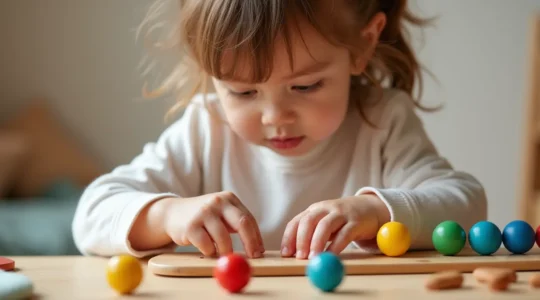
Beyond the Pencil: Fun Fine Motor Activities to Build Pre-Writing Skills
In summary: True pre-writing readiness starts with strengthening hand muscles, not tracing letters. Everyday items like Cheerios, clothespins, and play-doh are powerful tools for development. Focus on a progression: from large, whole-hand movements to precise finger control. The type of…
Read more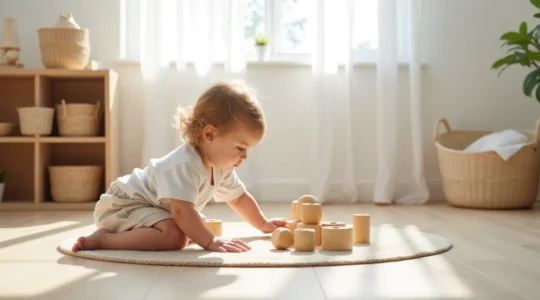
Toy Rotation: How to Foster Deep Play With Fewer Items
Toy rotation is not a tidying hack but an environmental design strategy that dramatically improves a child’s focus and creativity by intentionally limiting choices. Fewer toys counteracts “cognitive shutdown,” leading to longer, deeper, and more imaginative play sessions. Observing your…
Read more
Barefoot vs Shoes: What Is Best for a Learning Walker?
The healthiest choice for a child learning to walk is to be barefoot as much as possible; conventional shoes often hinder natural foot development. Rigid, hard-soled shoes restrict movement and mute the essential sensory feedback a child’s brain needs to…
Read more
Beyond the Smile: A Pediatrician’s Guide to Detecting Early Signs of Autism
Many parents worry about a simple checklist of autism signs. The truth is, understanding the neurological reasons behind milestones like the social smile or pointing is far more powerful. This guide moves beyond lists, explaining the ‘why’ of social development…
Read more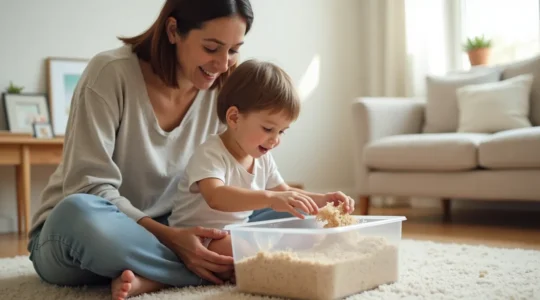
Sensory Processing Disorder vs Pickiness: Understanding Your Child’s Reactions
Your child’s challenging behaviors aren’t defiance; they are signals from a dysregulated nervous system. Forcing exposure to textures often backfires by reinforcing the brain’s association of that sensation with danger. The true goal is to build “neurological safety” through co-regulation…
Read more
The Brain-Gut Connection: Feeding Your Child for Optimal Neural Growth
Optimal brain development isn’t just about ‘healthy food’; it’s about providing the specific biochemical tools your child’s brain needs to build its core architecture and signaling pathways. Healthy fats are not just calories; they are the raw material for myelin,…
Read more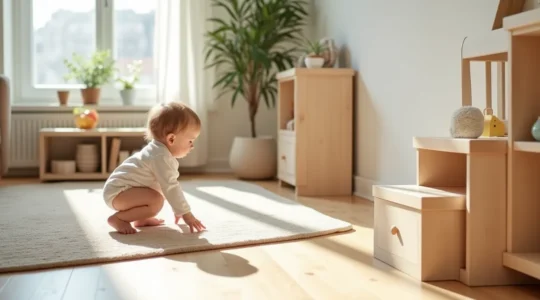
Designing a “Yes Environment” to Accelerate Gross Motor Skills Safely
In summary: Transform your small living space into a developmental gym by viewing floors, stairs, and furniture as tools for movement. Prioritize barefoot time indoors to enhance sensory feedback and strengthen foot muscles, critical for balance and walking. Create “scaffolded…
Read more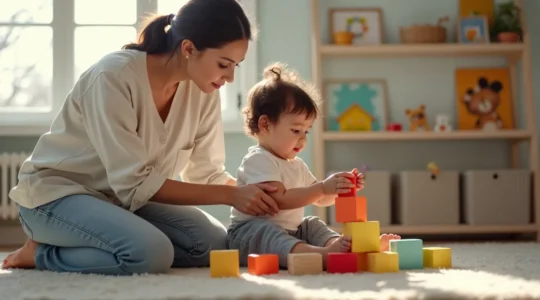
Is My Toddler Behind? A Neuropsychologist’s Guide to Understanding Cognitive Delays
Constantly comparing your toddler to others isn’t the answer. The key isn’t anxiously spotting ‘red flags,’ but understanding the *why* behind their behaviors to distinguish a variation from a true concern. A temporary speech delay in a bilingual home often…
Read more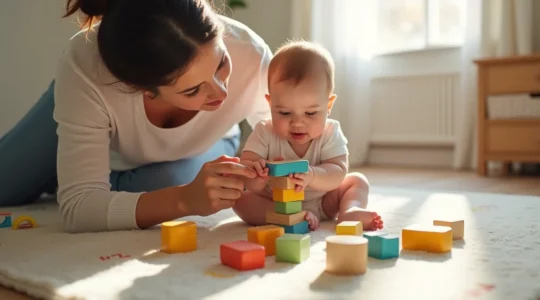
Boosting Synapse Formation Through Play in the First Year
In summary: Your baby’s brain forms over a million new neural connections every second; your interactions are the primary architect of this growth. Contingent responses to your baby’s babbles build language circuits more effectively than any passive screen time. Simple,…
Read more
A Minimalist’s Guide to the Montessori Infant Environment (0-6 Months)
In summary: Focus on high-contrast, simple items like black and white cards to match your newborn’s developing vision. Prioritize “passive” toys (e.g., wooden blocks) over “active” electronic toys to build concentration. Drastically limit time in “containers” like bouncers and swings…
Read more